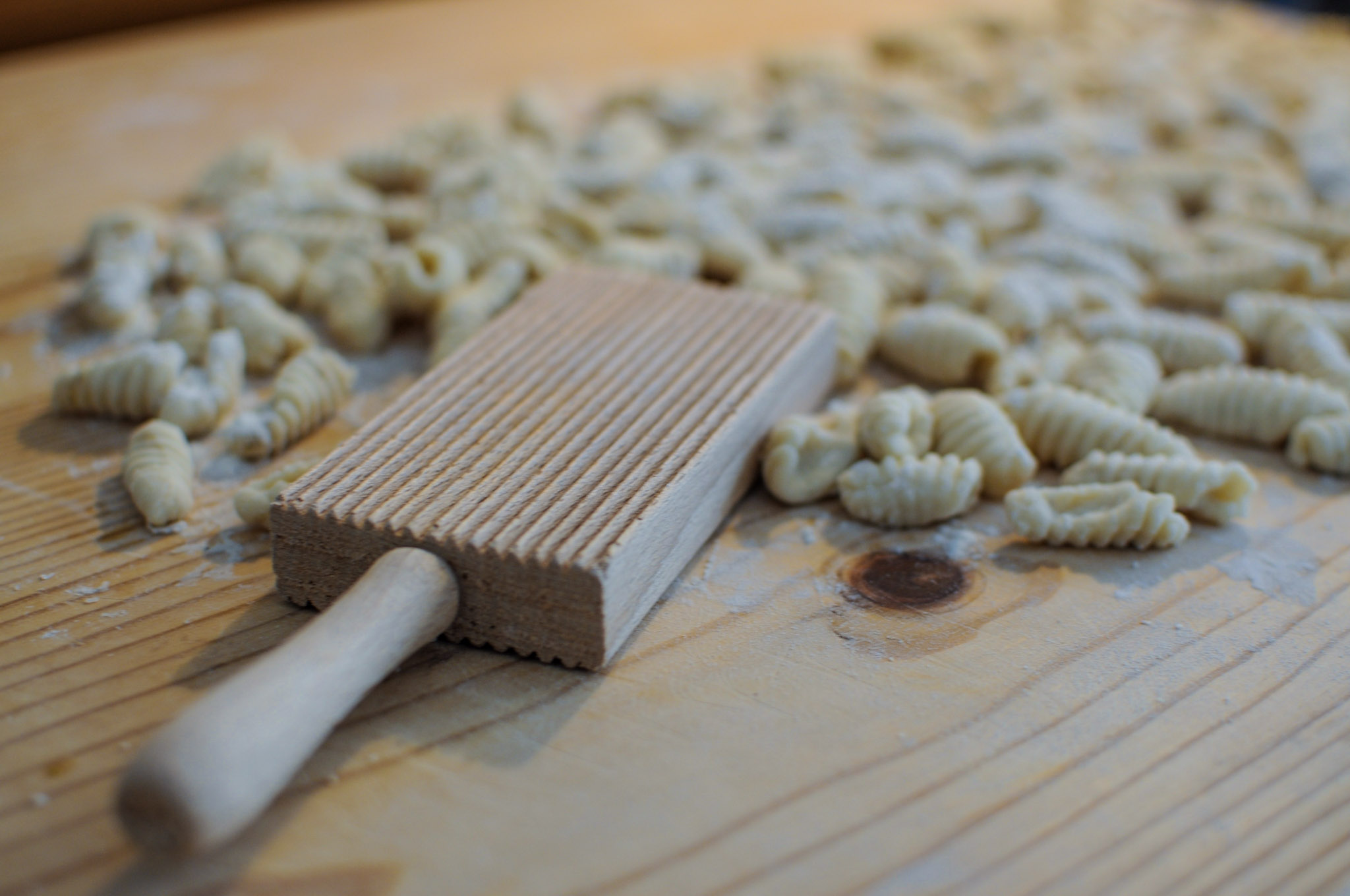
 Sundays spent with Francesco and his family are precious. His sister and mom work away making food to feed our family, stomachs and spirits. What better gift to give your family then nourishment? I pull up a chair and watch, listen and learn. The flour is sifted and hits a smooth board. Warm water is gradually placed in the volcano shaped well. Fingers gently incorporate the flour from the sides of the well into the water. A workable mound is formed. Cut and roll. Slice into cushions and roll on a wooden slated paddle completing the transformation into gnocchi. I am fortunate to have grown up sitting around a table most Sundays with my grandparents, parents, sister and extended family. I found that fortune again in Italy.

Simple gnocchi (no potatoes here)
Ingredients for 2
approximately 2 1/4 cups (300 g) flour 00
water as needed
pinch of salt
pepper
Boil a cup or two of water. Pile flour in a mound on a flat work surface. Make a well in the center of the flour. Add a pinch of salt, pepper and a few generous spoonfuls of warm water to the center of the well.  Use a fork to gradually draw in the flour from the inside of the well. Continue adding small amounts of warm water until all the flour is incorporated. Shape the dough into a ball and cut into four equal pieces.
 Flour them lightly and cover them with a kitchen towel to keep the dough from drying out. Working with one section of dough at a time, roll into long tube-shaped strips.
 Cut into small pillow-shaped pieces.
 We use two methods to shape the gnocchi: a fork or gnocchi paddle. If using a fork, gently roll each piece along the fork tines in a downward motion.
 If using a gnocchi paddle gently roll each piece along the paddle in a downward motion. Repeat with each piece of dough.
 Bring a large pot of water to a boil. Once water has come to a boil, toss a heaping teaspoon of salt in and cook for 4 – 8 minutes. The will float to the top when they are done. Gently lift the pasta from the water with a slotted spoon. Toss the gnocchi in your favorite sauce and enjoy with your loved ones.

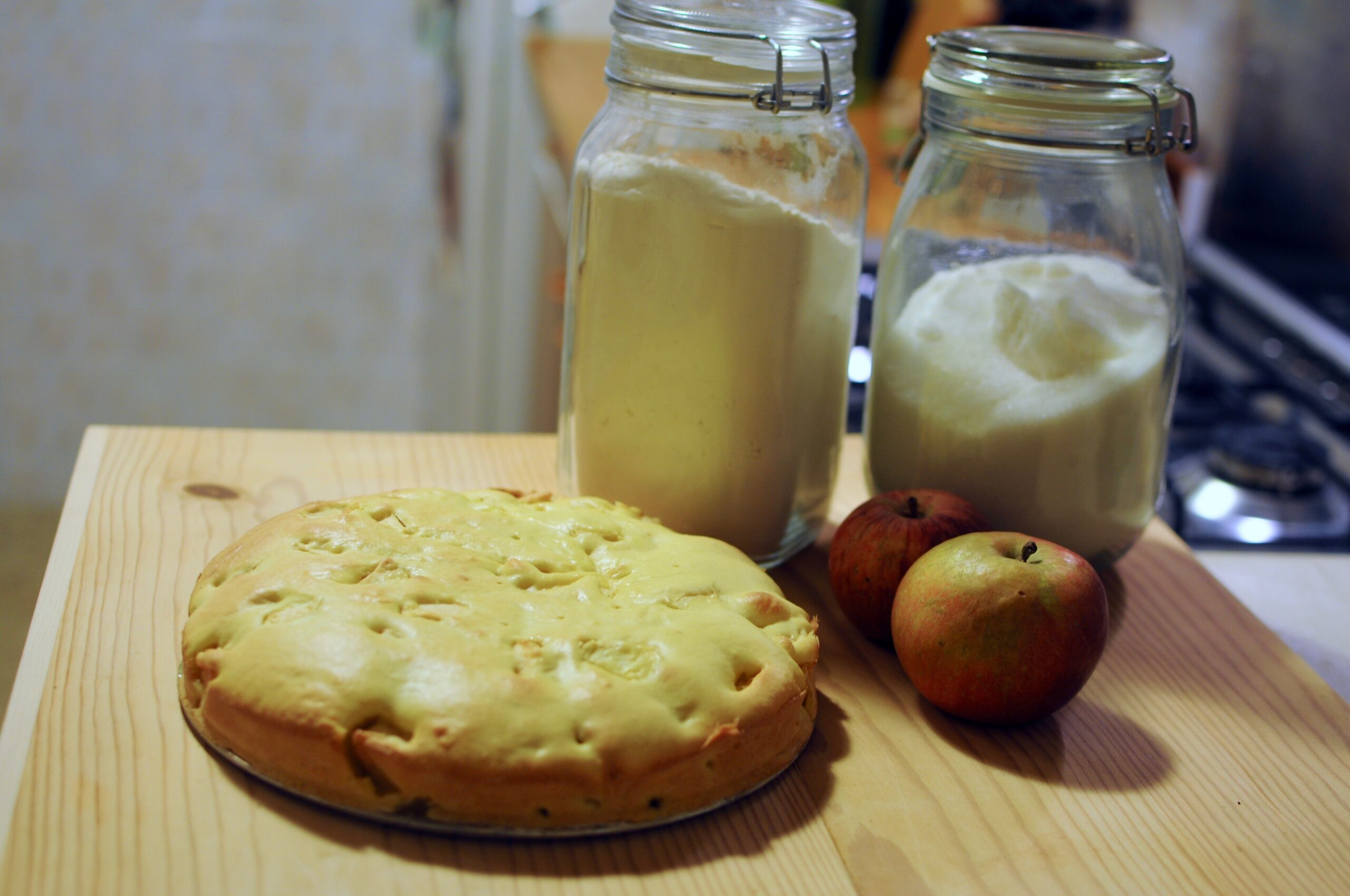
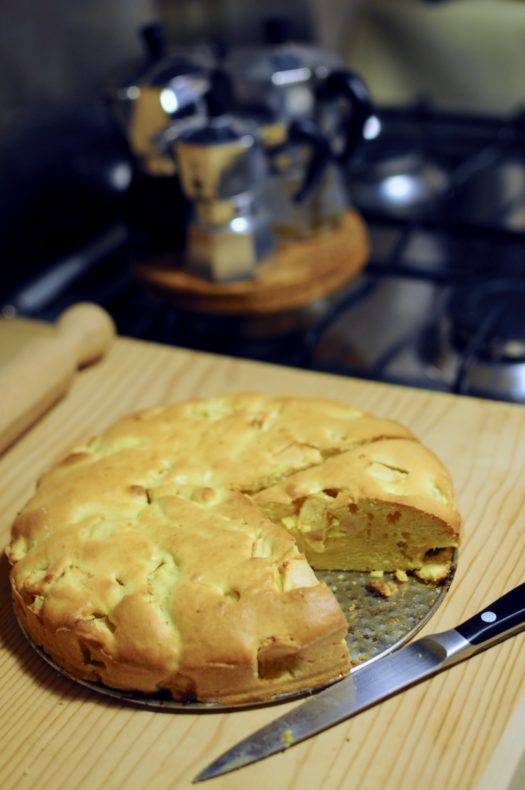 In Italy, I still make her apple pie but when I’m pressed for time, I turn to her apple cake recipe. It’s easy to make and not overly sweet. Enjoy it for breakfast, an afternoon snack or dessert served warm out of the oven or at room temperature.
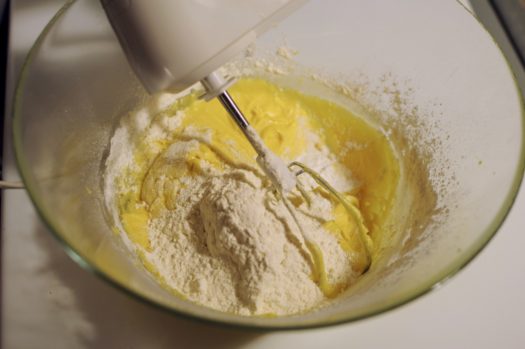
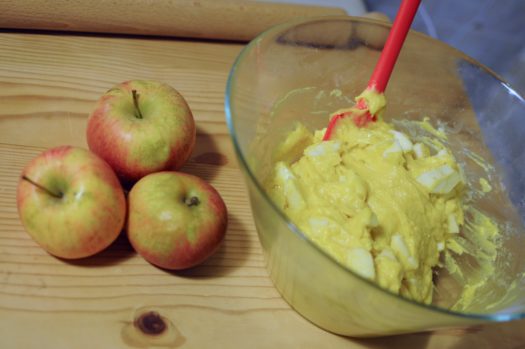 Add the apples and mix.
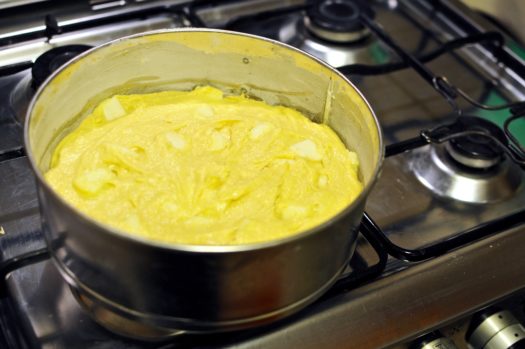 Pour the cake mixture into the buttered and floured cake pan.
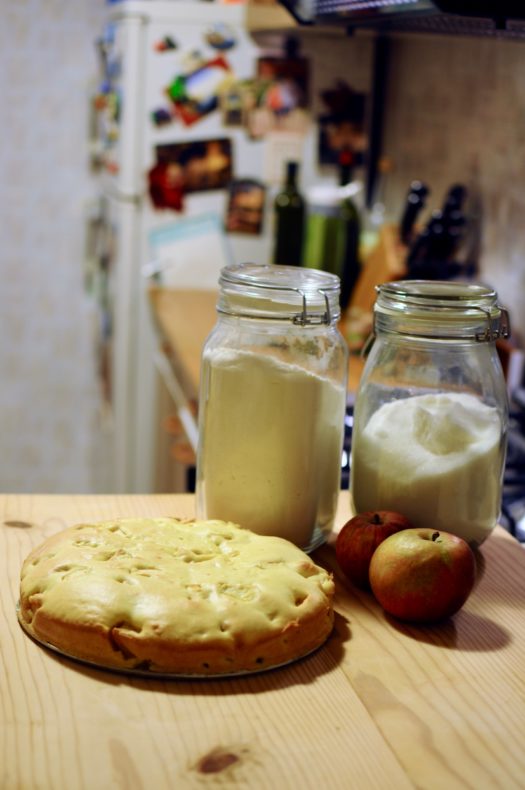 Bake for 30 to 40 minutes. Remove from the oven and let it cool or serve while warm. Serve with whipped cream or ice cream, if you like.
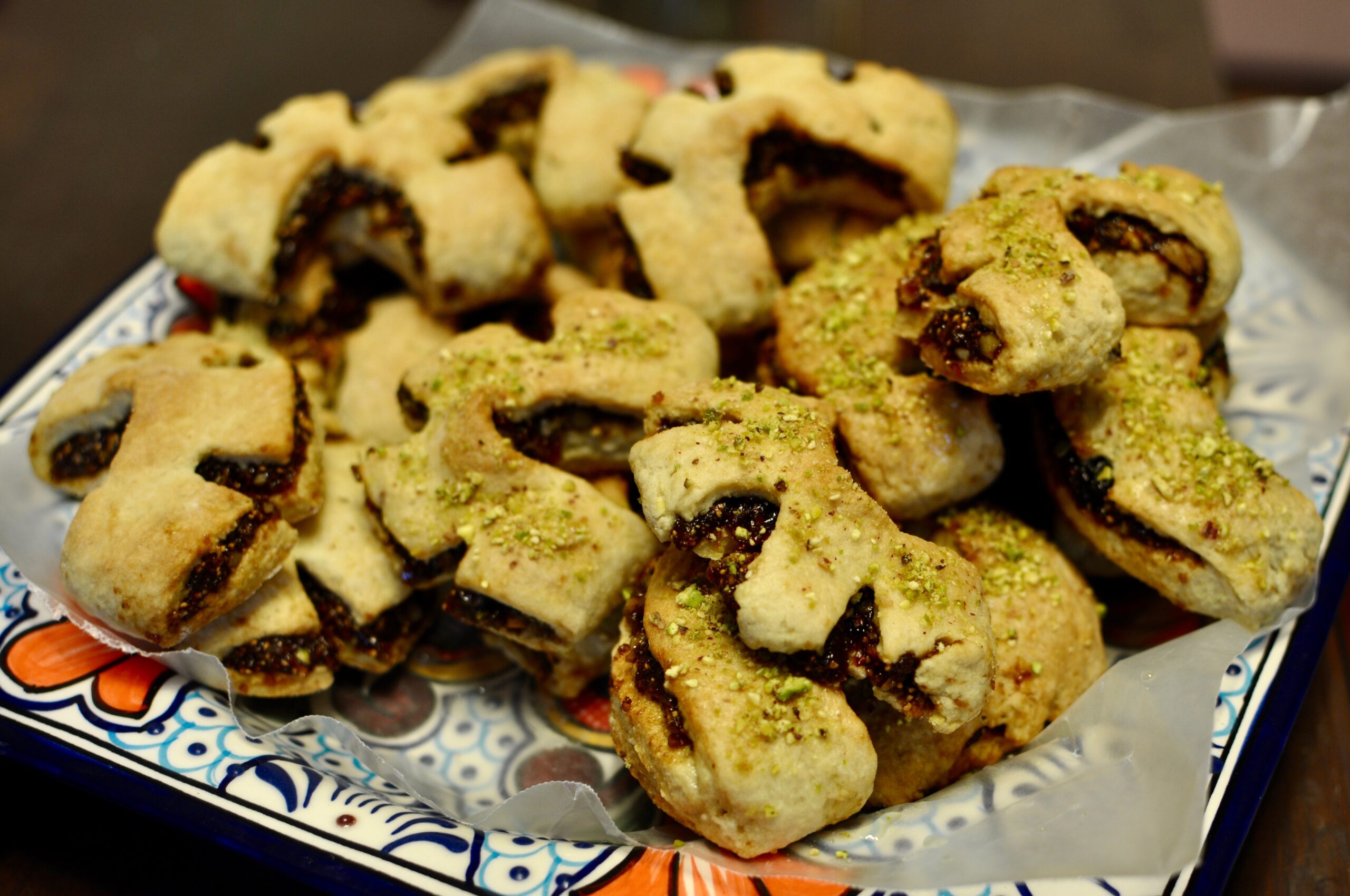

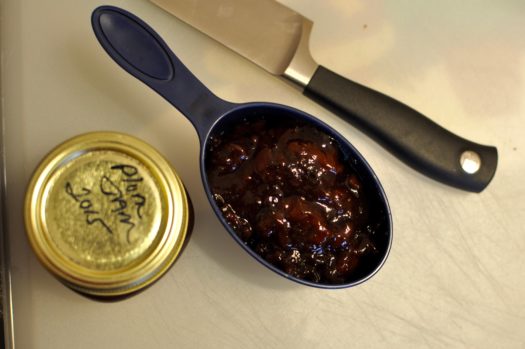
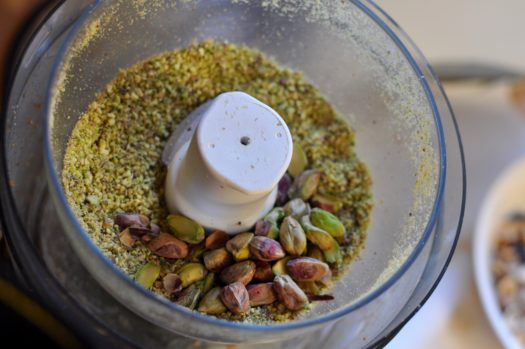
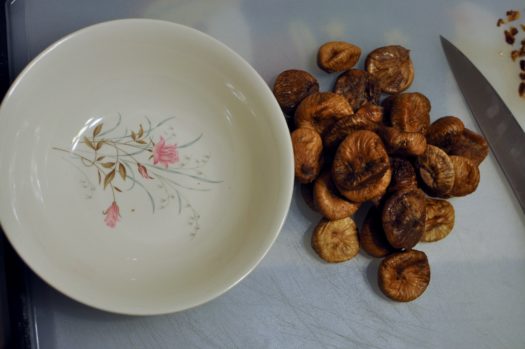 Add the jam, vino cotto and nuts (pistachios, almonds, walnuts). Stir frequently over low heat until the mixture thickens, about 10 minutes. Remove from the heat. Let the mixture cool to room temperature.
 Preheat the oven to 350° F before making the dough.
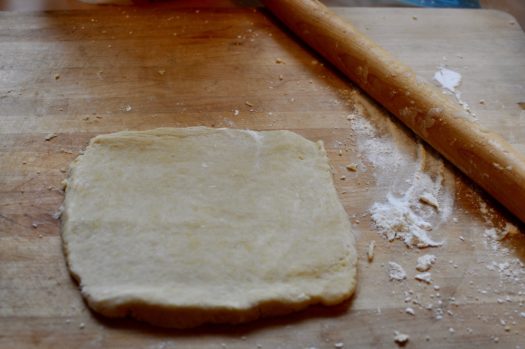 Divide the dough into quarters. Roll one quarter of the dough into a rectangle. The dough should be about 1/4 inch thick. Use a spoon to spread the filling along the bottom third of the dough.
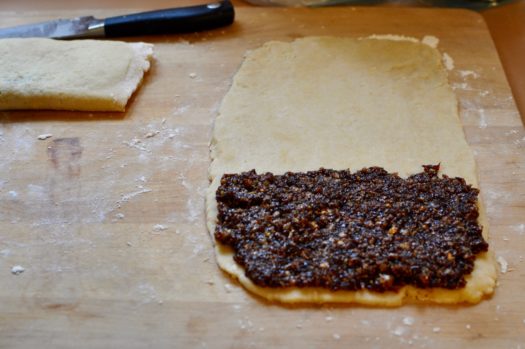 Fold the bottom over the filling. Fold the top over, enclosing the filling within the dough. It will look like a log. Turn the log over (seam-side down) and press gently to flatten it. Cut into 2-3 inch pieces. Gently shape each cookie into a moon shape.
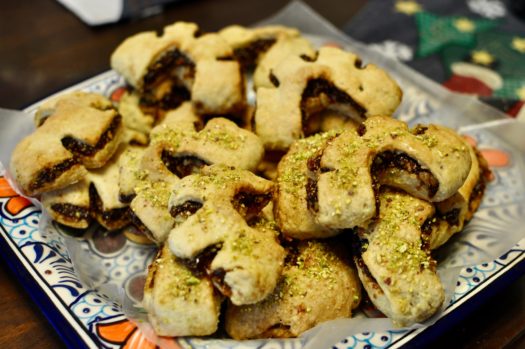
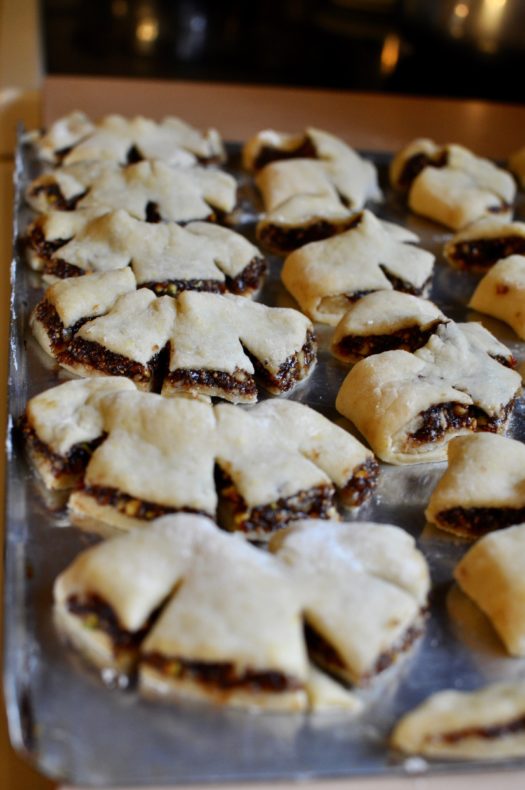 Make 3 slits on the rounded side of each buccellato. Place the cookies on a unlined baking sheet. Repeat until dough and filling are finished.
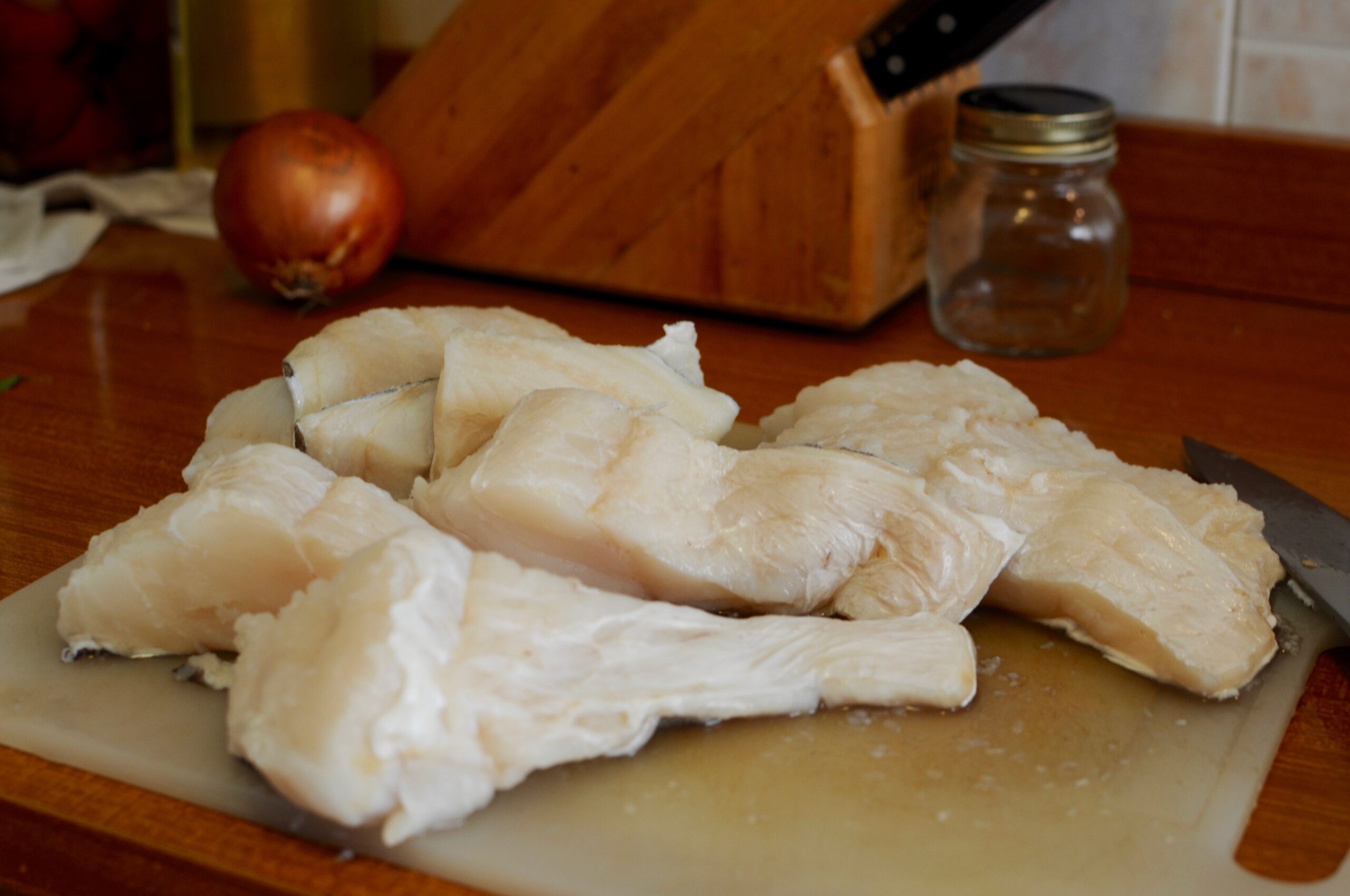


 Heat the olive oil in a pan. Add the anchovy fillets mashing them as they cook over low heat.
 Chop the onion and add it to the pan. Stir occasionally for 5 – 10 minutes or until the onion is translucent.
 Add the baccalà. Cook for 5-10 minutes on each side.
 Add the wine, capers and olives. Simmer for 15 – 25 minutes, stirring occasionally. Serve.
 I serve this dish as a second course. It’s delicious over potatoes too. Be sure to have crusty bread on hand to dredge through the sauce. Buon appetito!
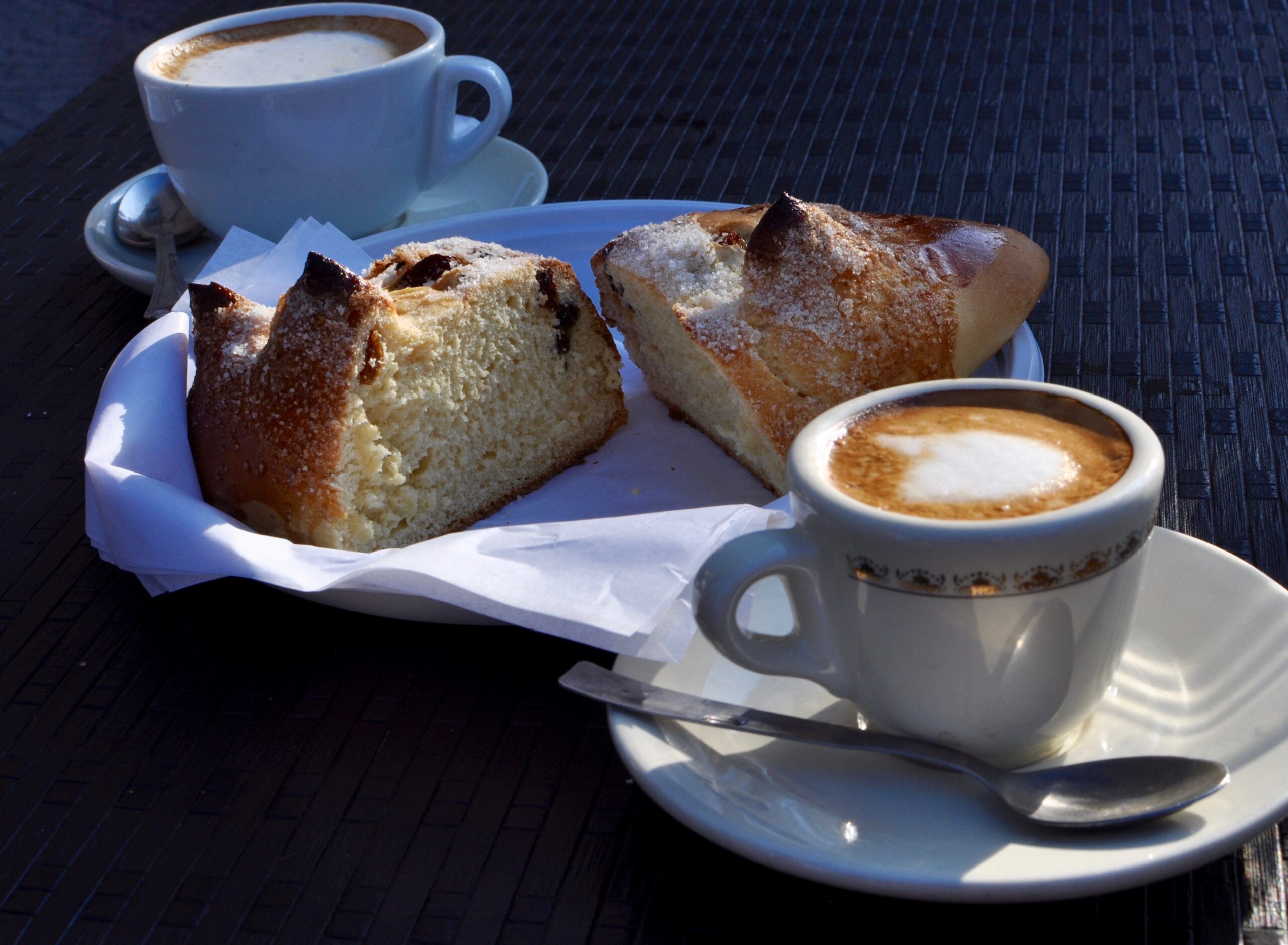
 My love for Sicily and city of Siracusa hasn’t waned. Visiting her is like slipping on my well-worn leather trench coat. Crunchy sea air, dark coffee fumes, baking buttery maritozzo and memories wash over me.
 I walk through the
 At Bar del Ponte Cristina, the baristas pull luscious, aromatic cappuccinos, caffès and caffè lattes. Trays of freshly baked cornetti, simple and chocolate filled brioche, bombe fritte (donuts), and sfgolie alla ricotta (fried pockets filled with ricotta cheese) fill the glass shelves. The maritozzo con uvetta is my favorite. The boat shaped pastry is made with sweet brioche dough speckled with raisins and lightly topped with sugar crystals.
 Maritozzo originated in Roman where raisin, pine nut and candied fruit studded maritozzi quaresimali were served during the Lent. In Rome today, plain maritozzo sliced open and filled with whipped sweetened cream are more common. I prefer the Sicilian version served alongside a cappuccino while sitting at an outdoor table looking at the Temple of Apollo and listening to Sicilian chatter. Buon colazione!
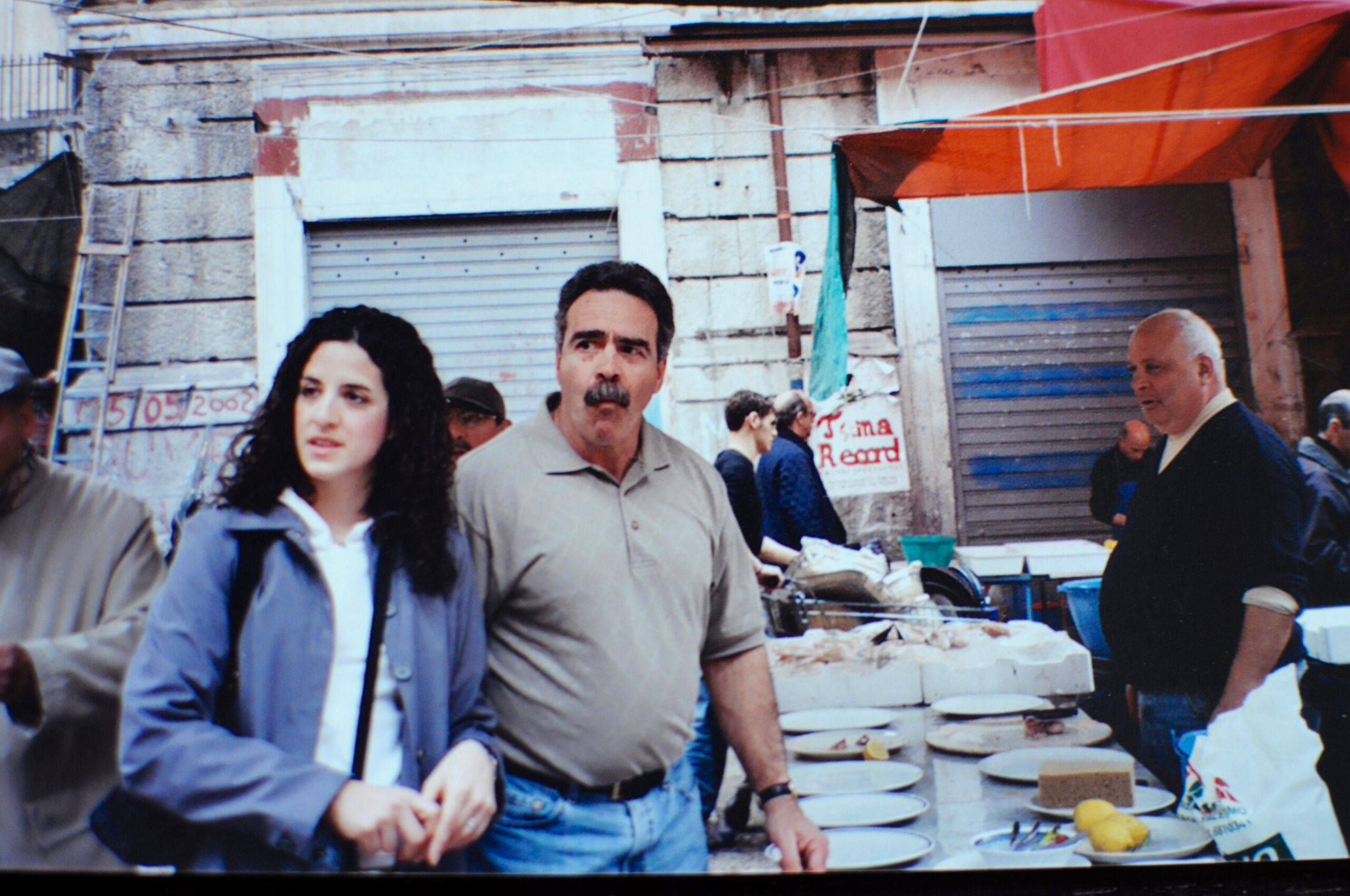
 A friend asked me today, why Sicily? The first answer is because my paternal grandparents were born in Augusta, Sicily. They lived there for more 35 years. I was connected to Sicily well before I ever stepped foot on her beautiful soil. My maternal grandparents are from the region of Campania which meant I grew up with a mishmash of Sicilian and Neapolitan culinary traditions, stories and superstitions.

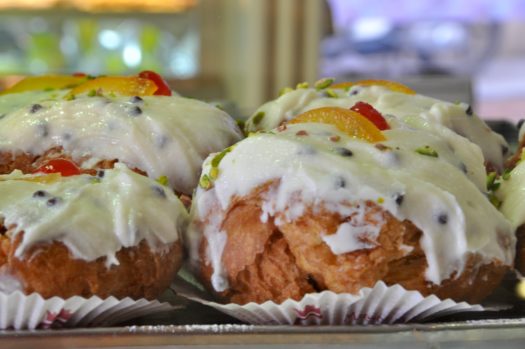 Since then I’ve visited Sicily countless times with family, friends, and clients. It feels like home. Although the authenticity of the Vucciria market has declined, the Capo and Ballarò markets are a short walk away as are pastry shops serving cannoli, iris, and marzipan sweets as well as traditional and modern restaurants, pizzerias and wine bars.
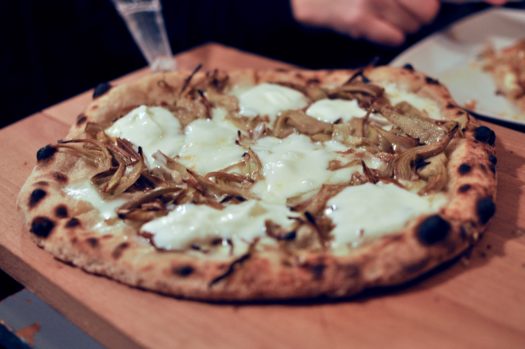
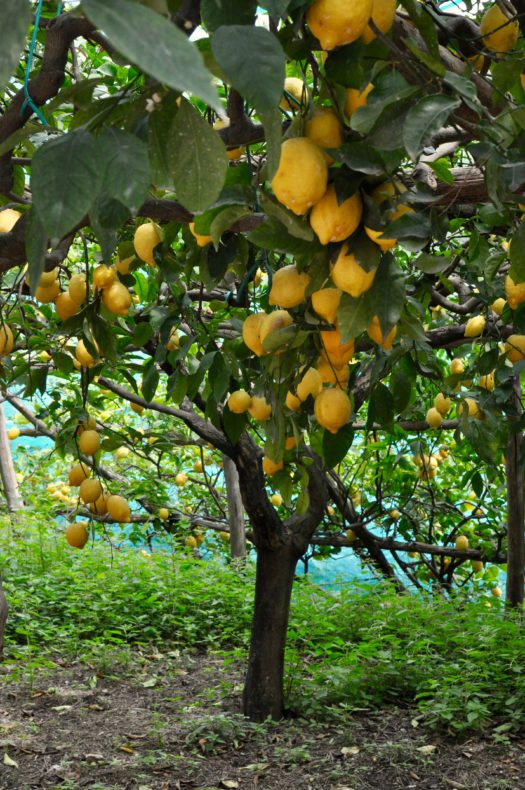
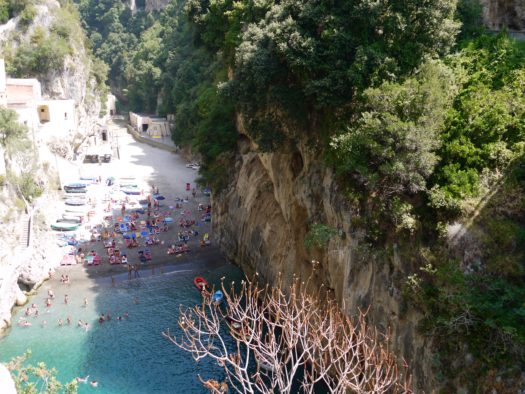 Many moons ago I visited Cetara with Francesco, my father-in-law and 4-year-old nephew. The day remains etched in my mind. The hot July sun chased us as we sped past sandy beaches, the crystalline waters of the Amalfi Coast and lemon trees. After an hours drive on a seemingly never-ending windy road we arrived at the fishing town of Cetara.
 It was here that I met my friend
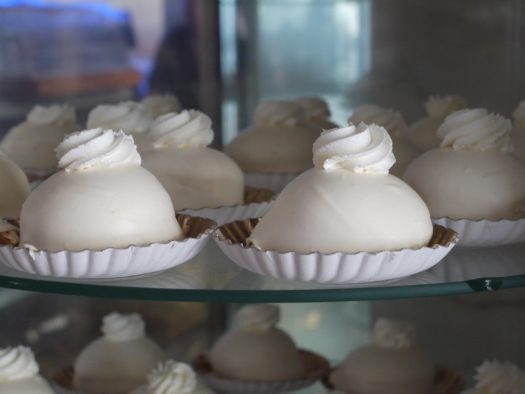
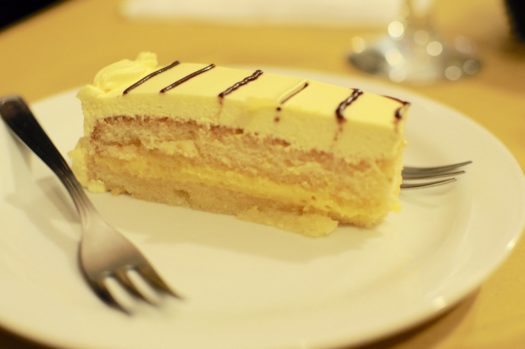
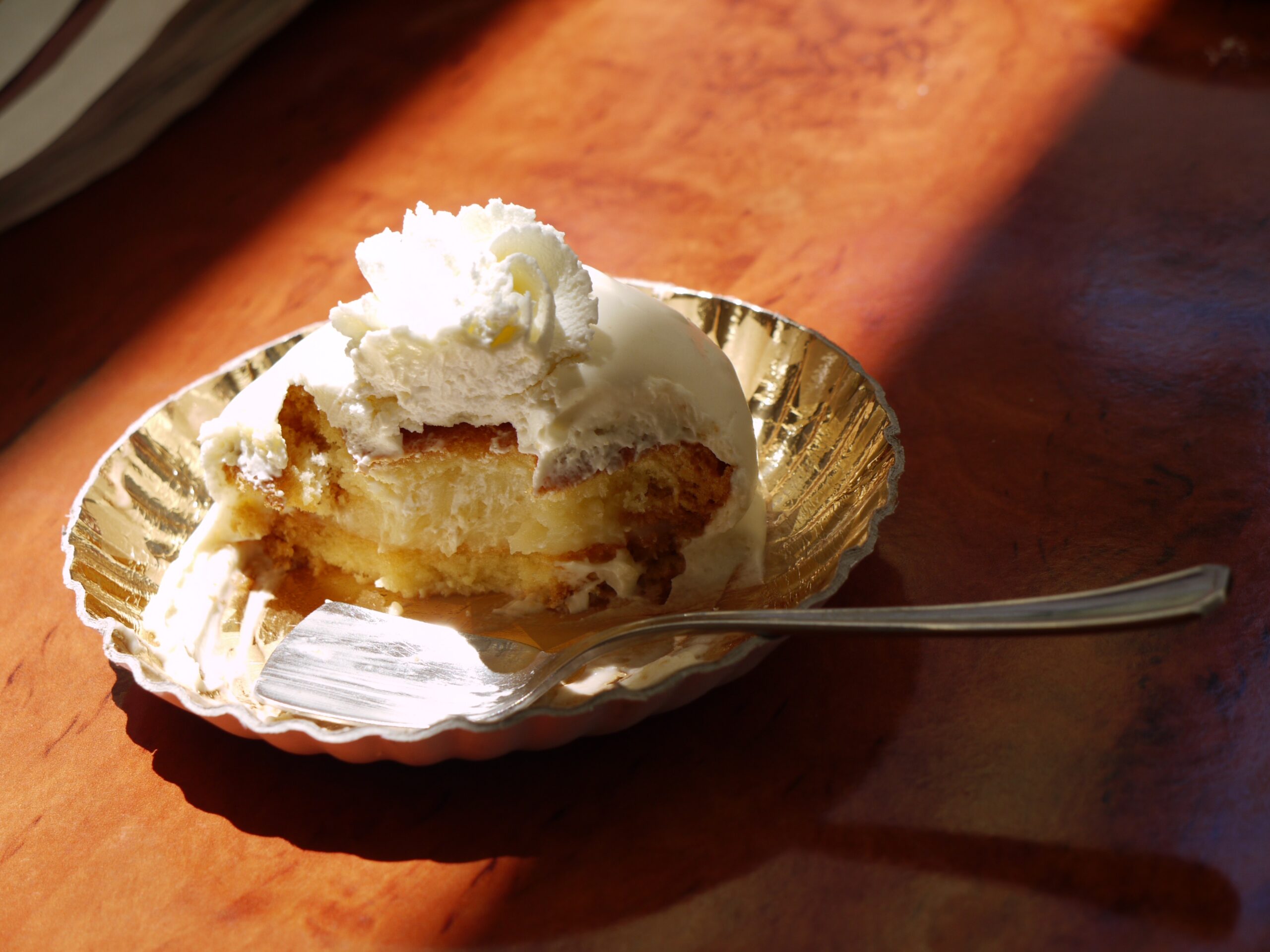
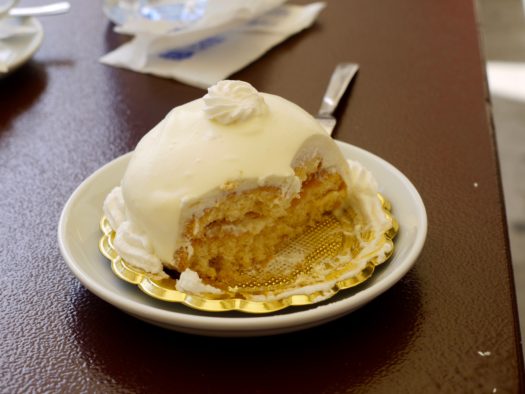 This lemon-centric dessert reminds me of summer days. The scent of the sea and the local yellow fruit bring cravings for delizia al limone. The citrus taste and springy cake are refreshing and light. The bottom layer is made of pan di spagna – sponge cake – soaked in a lemon infused simple syrup or in a limoncello syrup. The filling changes from bakery to bakery. Most use pastry cream infused with lemon zest. Delizia al limone is made in a cake-form frosted with a lemon whipped cream and in individual dome portions. I prefer the latter at the end of a salty beach day in Cetara with family.