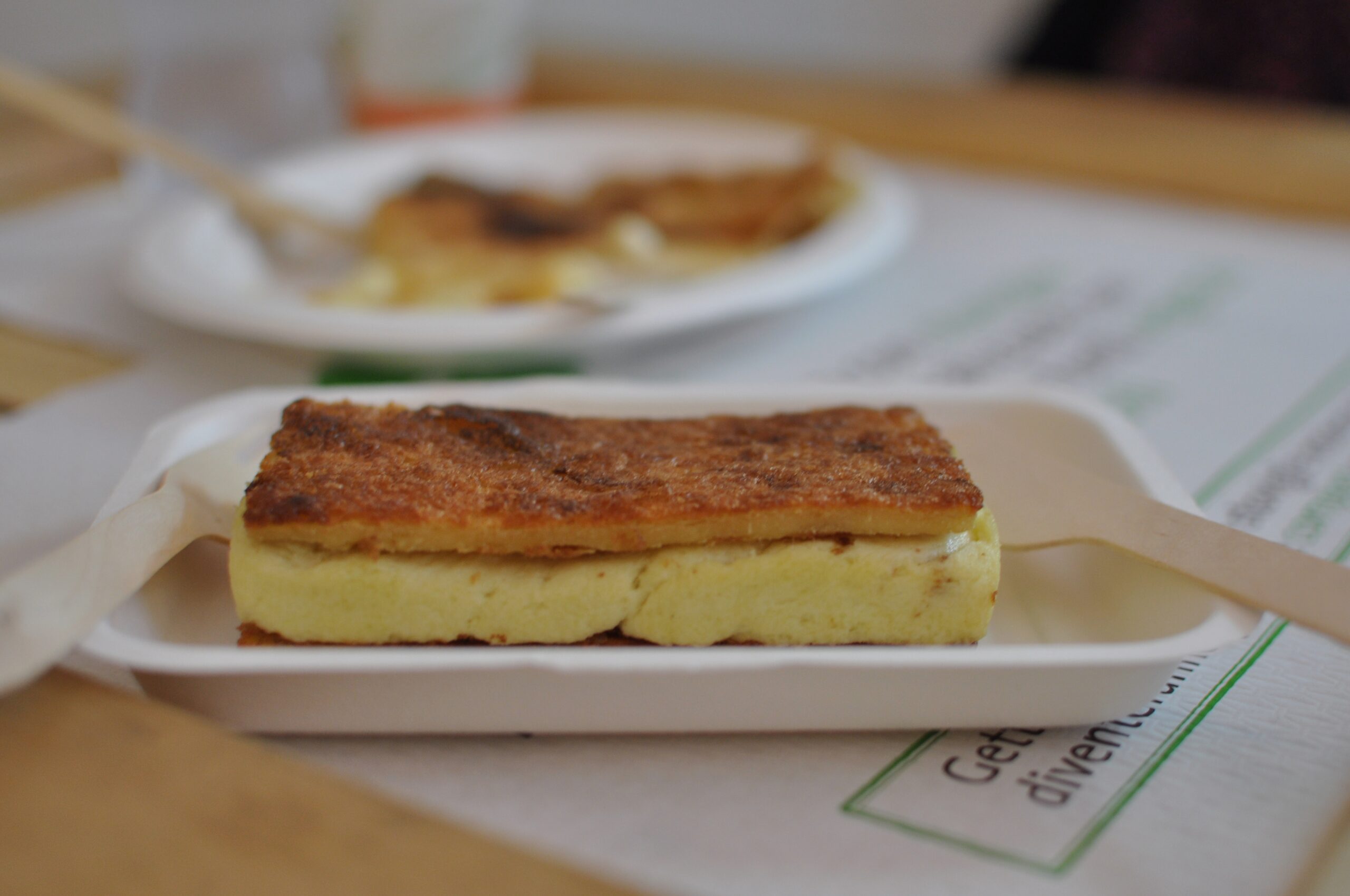
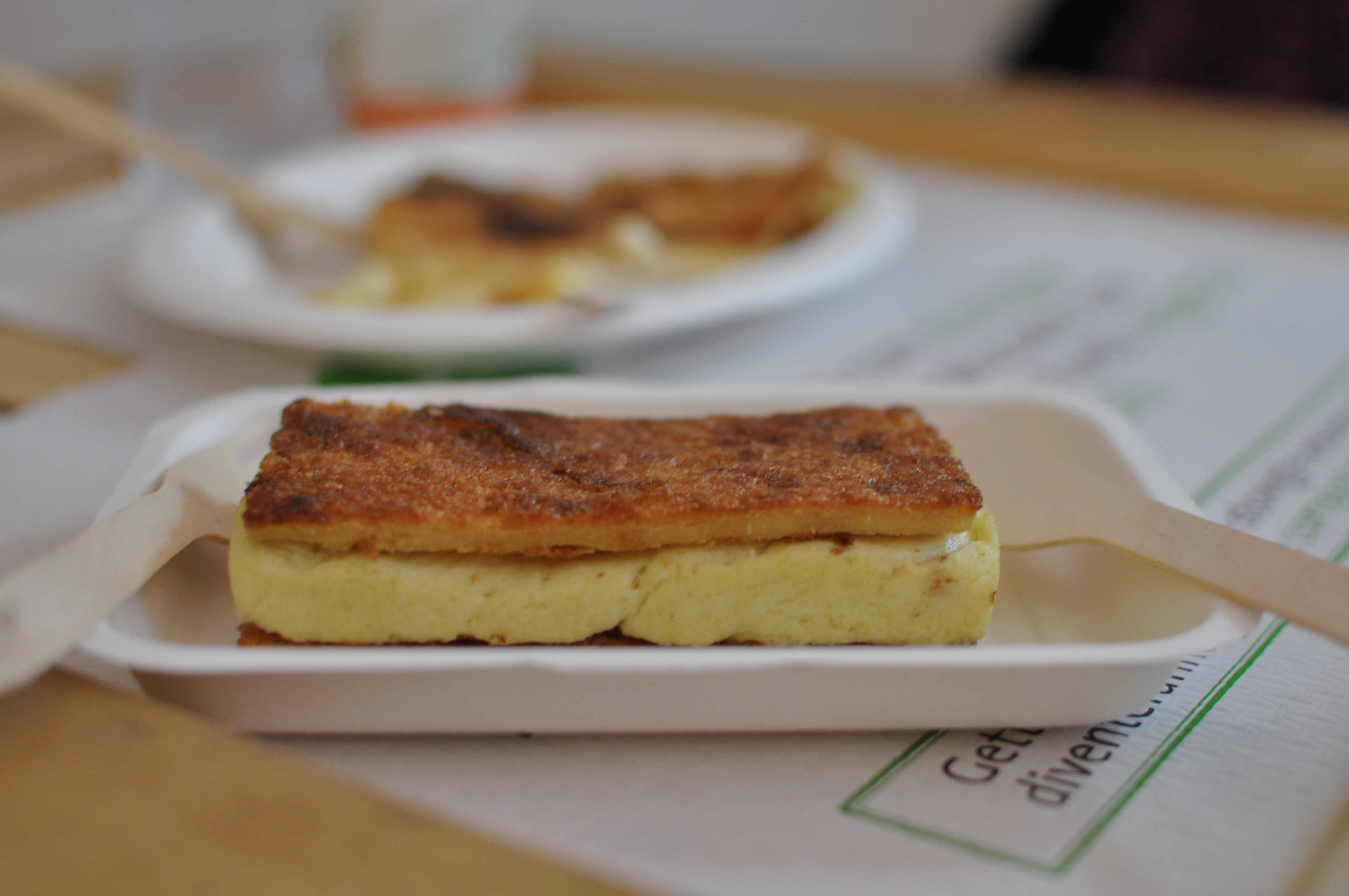
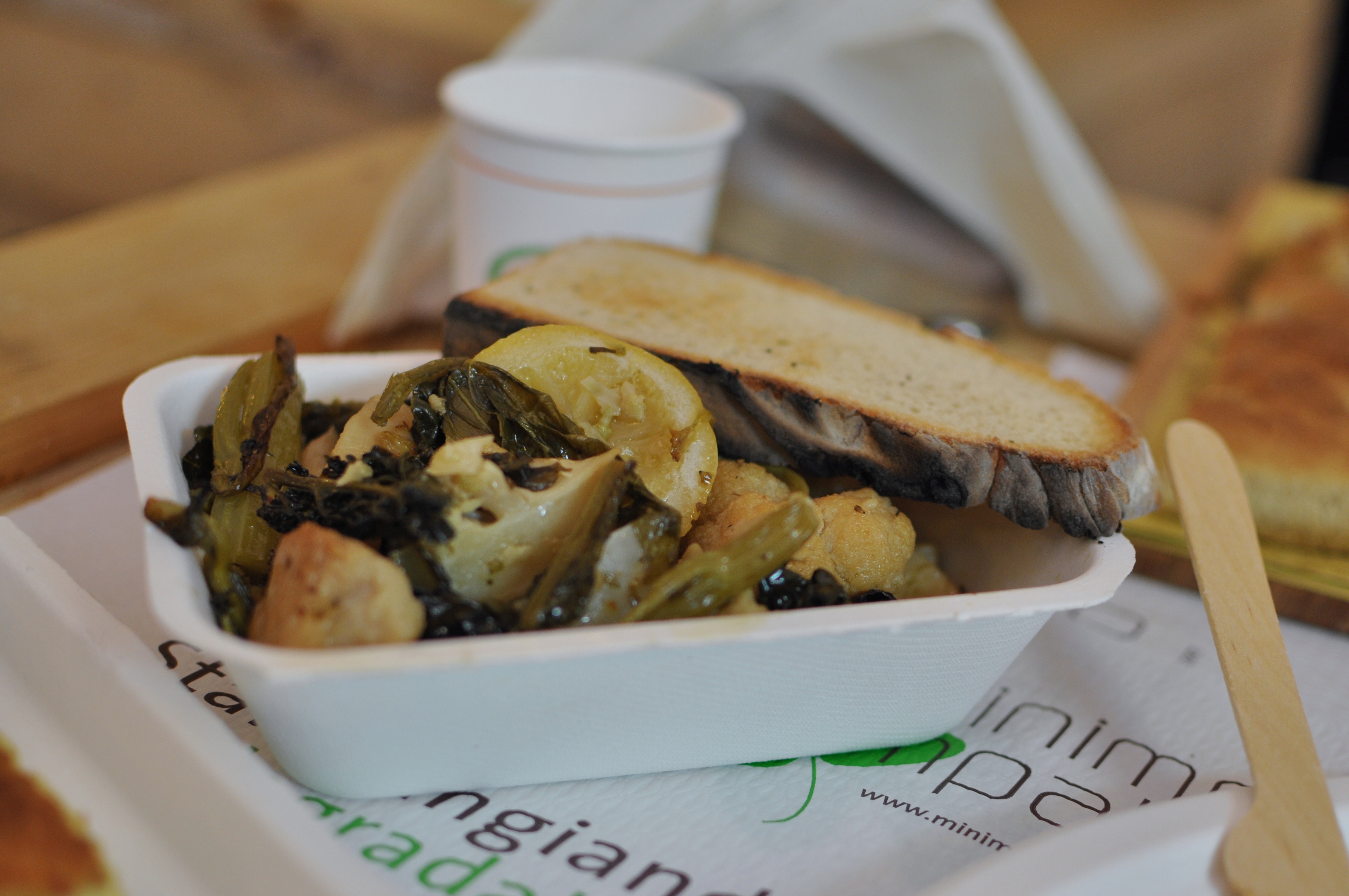
 I’m often asked what is Dall’Antò? A good answer may be a venue where you can sit at a communal table and spend hours leafing through a library of gastronomic treasures while eating traditional flatbread, crepes and roasted vegetables OR a shop where you can enjoy a glass of wine with baccalà mantecato (salt cod mousse) sandwiched between farinata (baked chickpea flour flatbread) OR an eatery where you can nosh on honey and hazelnut biscotti with a caffé alla napoletana OR why not all three?
 Last week, I spent the afternoon with Antonio Menconi, Dall’Antò co-founder, learning more about the restaurant/library/eatery.
GT: Why did you open Dall’Antò?
AM: It is a business/marketing project backed by a political vision. We refer to as ADA, arte degli altri.
GT: Can you tell me more?
AM: More often than not the ingredients used by restaurants to create each dish are hidden even if the initial ingredients are stellar. It’s about the chef. We believe in the opposite. We source our flour, olive oil, cheese, etc from people who we are artists/artisans. They are small producers who have the need for someone to market and explain the quality of their products to the public. Our goal is to do just that by introducing our customers to the small producers, championing them, their work and their passion. Dall’Antò uses cheese from Beppe e I Suoi Formaggi, olive oil from Colli Etruschi, and flour and chickpeas from Poggi. They are all artists.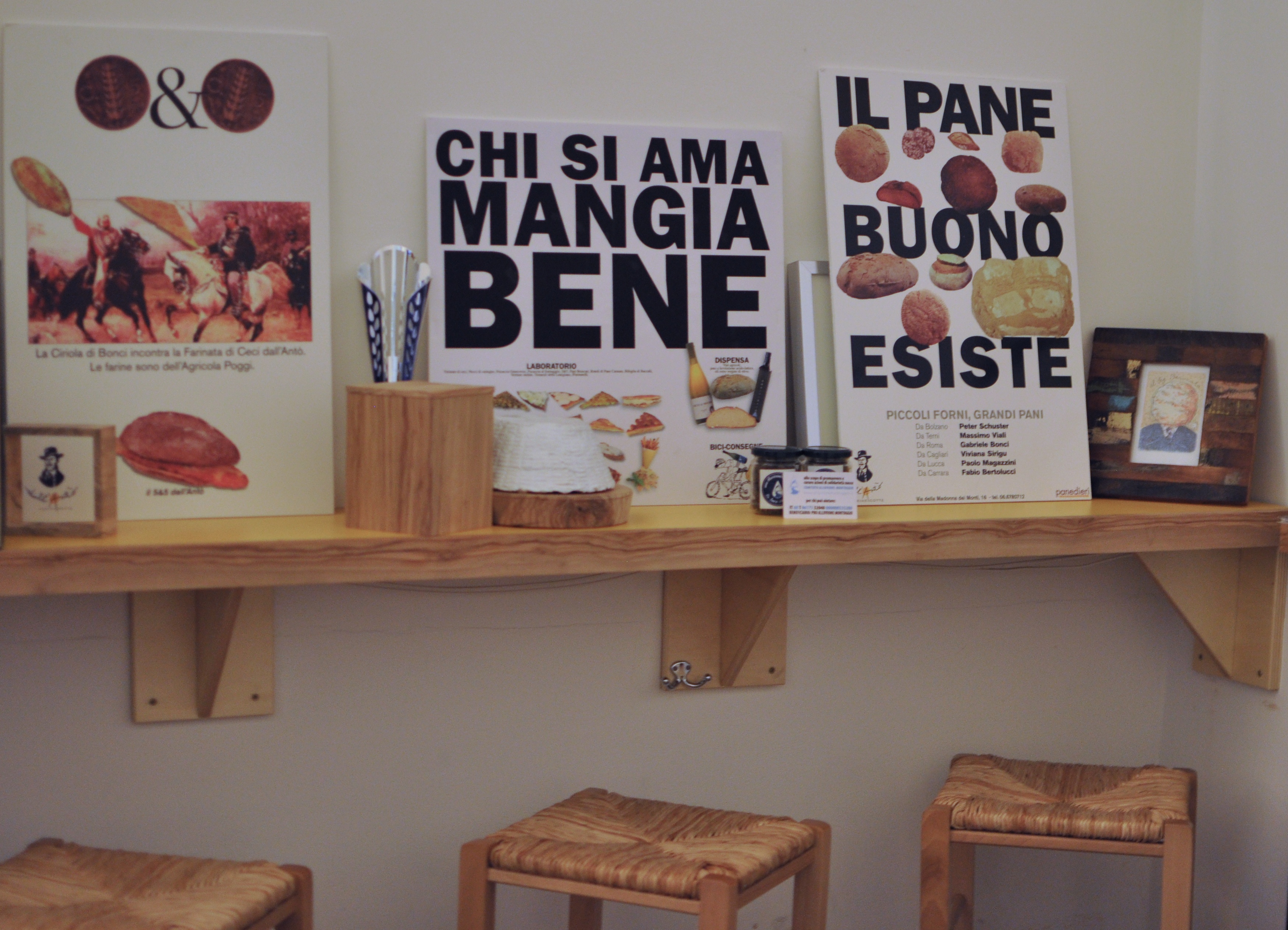
GT: What are the three must-eat dishes for a first time visitor to Dall’Antò?
AM: Definitely farinata (baked chickpea flour flatbread and extra virgin olive oil), the neccio di castagne (chestnut flour crepe), and the rotolo di pane carasau (traditional Sardinian flatbread made from durum wheat which is rolled and filled with cheese) because they are three diverse and representative dishes of simple food.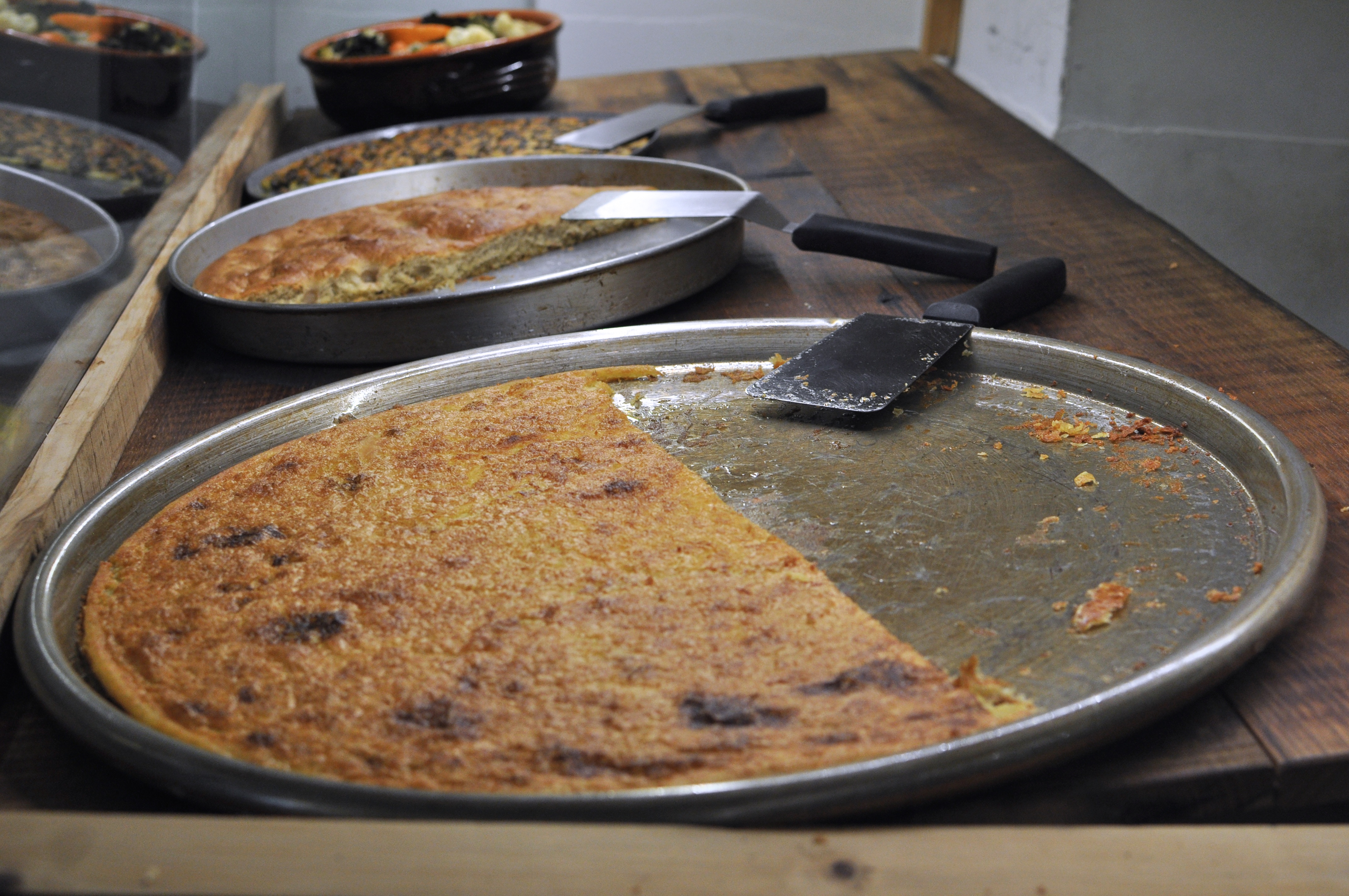
GT: Which version of farinata do you recommend?
AM: Start with a slice of plain farinata. Taste the ingredients that make up this basic flat bread, chickpeas from Poggi and Colli Etruschi olive oil, and then move on to a slice of farinata with Capperi (capers) di Selargius (Sardegna). It’s about the ingredients.
GT: I love the melding of Sardinian briny air, delicate fruity oil, and sweet legumes. 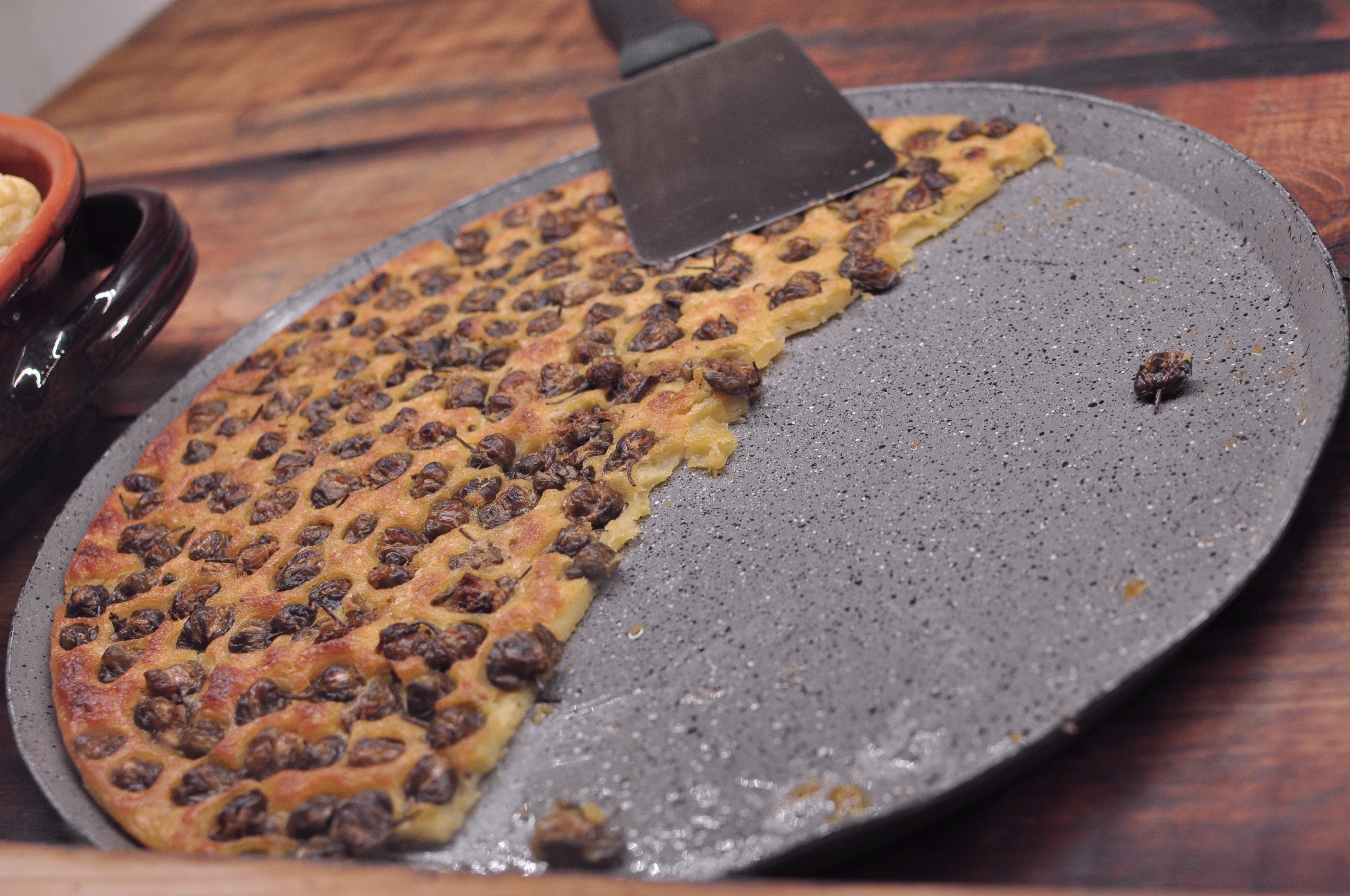
GT: What filling is best for neccio di castagne?
AM: Goat’s milk or sheep’s milk ricotta, or stracchino. Our cheese is made by Beppe of Beppe e I Suoi Formaggi in the regions of Piedmont, Tuscany and Lazio while the DOP chestnut flour is from Carrara and Viterbo. The quality of most chestnut flour available in supermarkets is poor. Producing chestnut flour is a long and laborious process. The chestnuts need to be dried out and the outer shell and inner husk must be completely removed. If not you’re left with an astringent tasting flour.
GT: Can you tell me about the rotolo di pane carasau?
AM: Pane Carasau is a crisp delicate flatbread from Sardegna. It’s placed in warm water, filled with soft cheese, rolled and cooked until the outside becomes golden brown and crispy.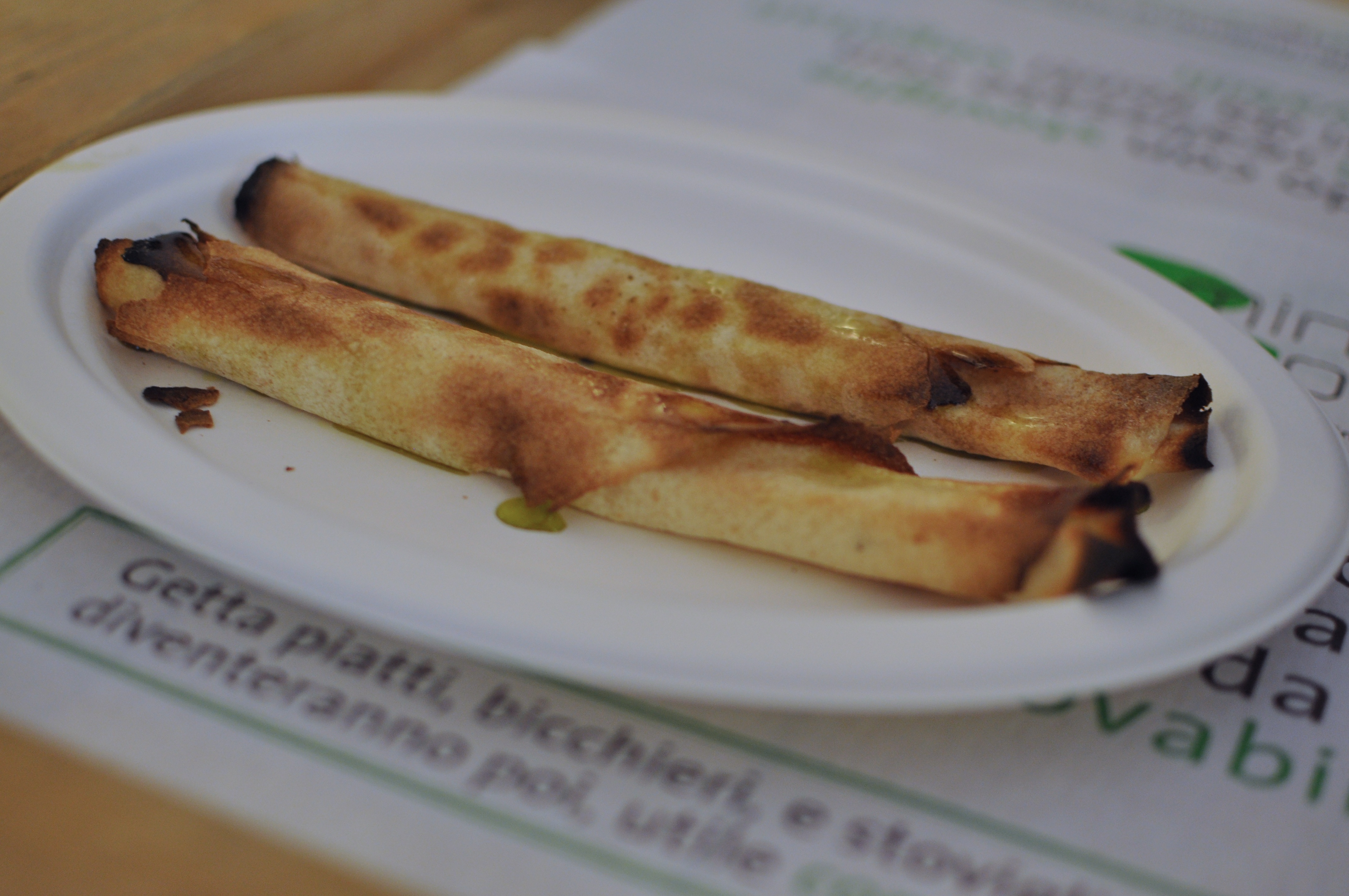
GT: It’s a warm and savory snack that is perfect for a cold February day in Rome. If you’re in a rush grab one to go. And I never miss the baccalà mantecato, foccacia, biscotti and coffee.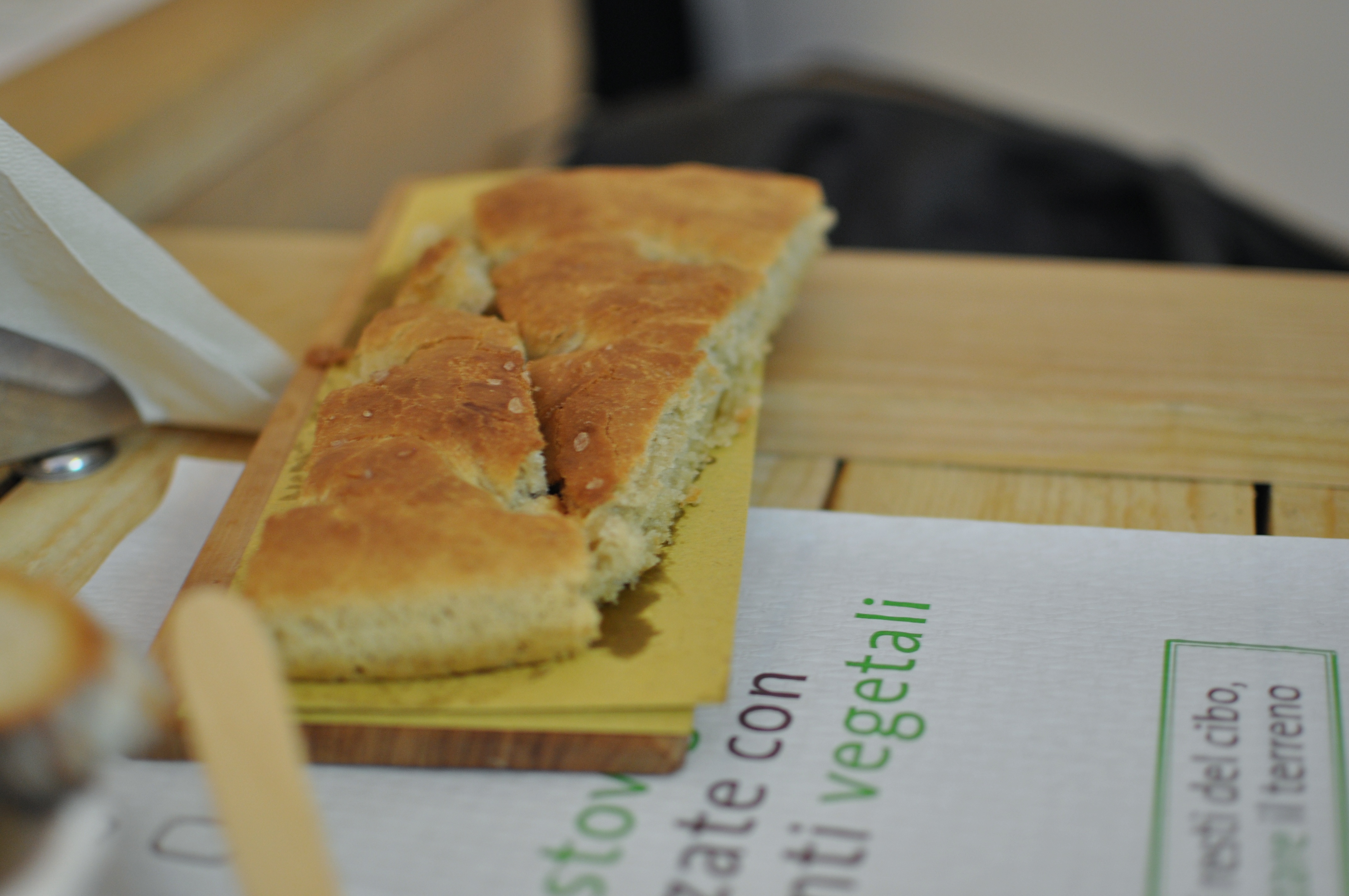
If you don’t have a chance to stop at Dall’Antò, Antonio also sources the traditional Italian breads at Beppe e I Suoi Formaggi and Volpetti.
Address: Via Madonna dei Monti 16; telephone +39.06.6780712.
Open Tuesday through Saturday from 12:00 to 23:00 and Sundays from 12:00 to 15:00. Closed Mondays.

 There’s a definite food buzz around Rione Monti punctuated by
 I visited the newly opened “Antico Forno ai Serpenti” and had a chance to interview owner Alessandro Santomauro and talk with Sergio Conti who oversees all baking and bread making. I also spent some time in the kitchen and behind the counter getting to know the staff and sampling many fresh out of the oven goodies.
 Why did you open the forno (bakery)?
 Can you tell me about the Conti family and their role here?
 Why did you choose the name “Antico Forno ai Serpenti”?
 Why did you choose to design the interior in a 1930s style?
 Which goods do you consider to be your signature products?
 Can you talk to me a bit more about the products and recipes?
 Can you tell me about the bottled merchandise on display?
 Is there anything else you’d like to add?
 You can visit Antico Forno ai Serpenti on the corner of Via Parnisperna and Via dei Serpenti, Monday – Saturday from 7:00 am to 10:00pm and Sunday from 7:00 am to 2:00 pm. Don’t miss a warm cornetto, pizza bianca and la mela in camicia (apple wrapped in flaky pastry dough pictured above) best straight out of the oven!